
- Your cart is empty
- Continue Shopping
 By
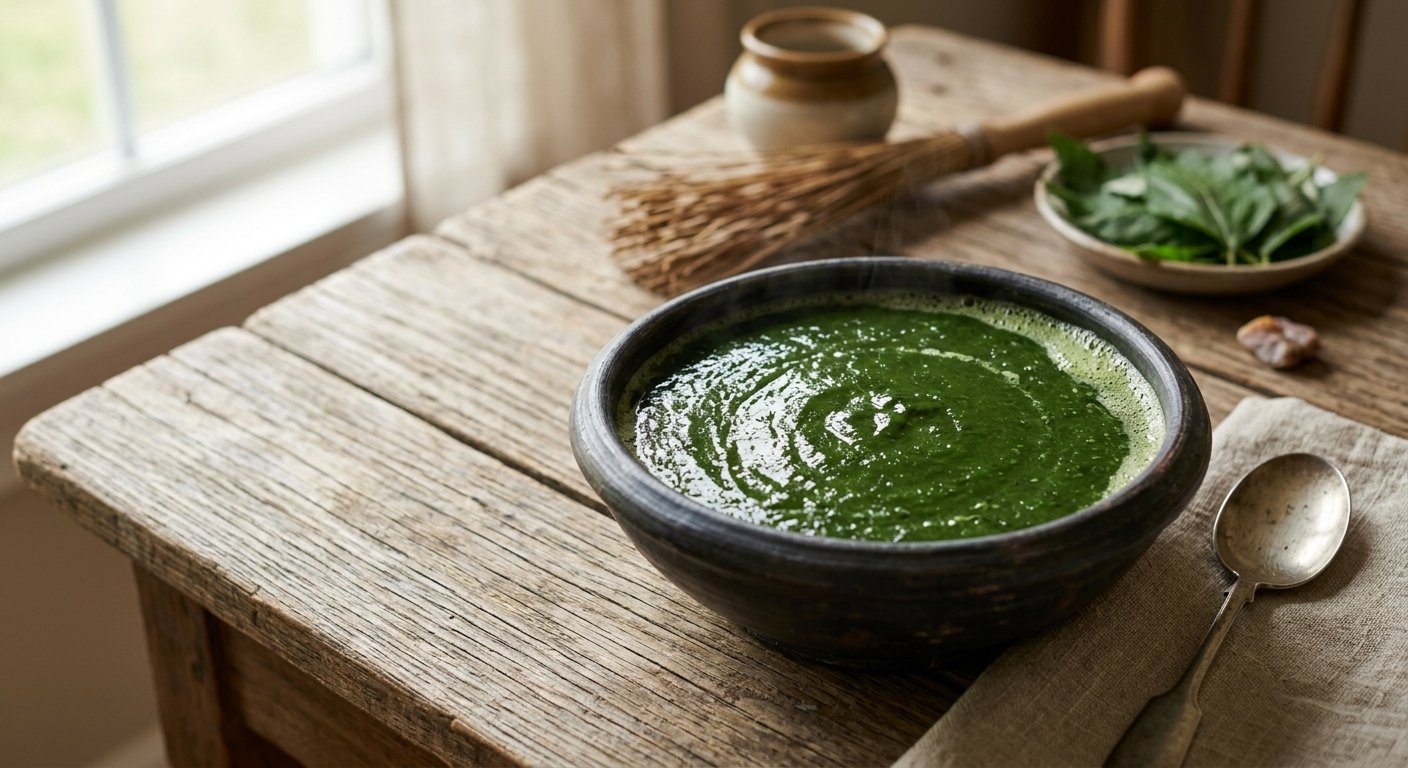
By Real ewedu soup should be smooth and slightly slimy, almost like a purée, not clumpy or stringy. Lumps almost always come down to how the leaves are cooked and blended, not the recipe itself.
Choosing Your Jute Leaves
Start with fresh ewedu (jute leaves) if you can find them, or jute leaves as a reliable alternative. Wash them thoroughly and remove any tough stems before cooking, stems are a common hidden cause of lumps.
The Potash Trick
The single biggest fix for lumpy ewedu is potash (kaun). A small pinch dissolved into the cooking water helps break the leaves down into that signature smooth, silky texture as they cook. Skipping potash is the main reason many home versions of ewedu come out stringy instead of smooth.
Cooking the Leaves
Boil your leaves in a small amount of water with the dissolved potash until they soften completely, about 5-7 minutes. Don’t overcook them past this point, texture matters more than cook time here.
Blending for a Smooth Finish
Once softened, blend or whisk the leaves vigorously, a traditional ewedu whisk (a bunch of broom sticks) or a hand blender both work. Blend until every visible fiber breaks down and the soup turns smooth and slightly frothy. Any shortcuts here are exactly what leaves lumps behind.
Finishing the Soup
Stir in crayfish and your seasoning of choice, and simmer briefly to combine. Ewedu is traditionally light on heavy spices, let the leaves and crayfish carry the flavor.
Serving It Right
Ewedu is almost always served alongside a heartier soup like gbegiri, over pounded yam. The smooth ewedu and thick pounded yam are meant to be eaten together in the same swallow.
Shop the Ingredients
Get everything you need for smooth, lump-free ewedu at Shalom African Foods, your trusted African food store. As an online African grocery store built for the diaspora, we deliver jute leaves, potash, and crayfish straight to your door.
